
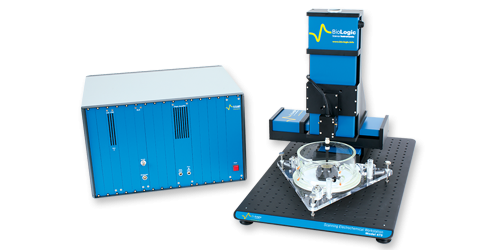

Description
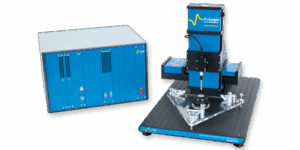
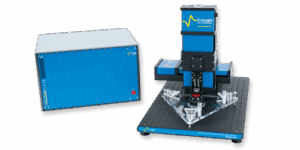
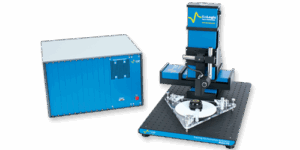
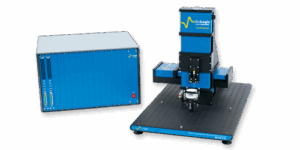
Scanning Vibrating Electrode Technique measurements are performed on BioLogic’s M470 using the SVP470 option.
Scanning Vibrating Electrode Technique (SVET), also known as Scanning Vibrating Probe (SVP), and Vibrating Probe in the field of biology, is a non-intrusive scanning probe electrochemistry technique. SVET is used to measure the local electric field of a sample in solution, ultimately allowing the current density of a sample to be mapped. SVET achieves a high degree of electrical sensitivity and stability, in particular compared to predecessor techniques, through the vibration of the probe perpendicular to the sample. This sensitivity and stability make SVET well suited to mapping electrochemical events in real-time.
With SVET, events occurring in dynamic samples, can be followed in real time: a factor that is highly advantageous for researchers wishing to follow electrochemical processes as they occur. This characteristic has led to SVET finding widespread use in corrosion and coatings, to investigate, for example, corrosion propagation, coating efficiency, self-healing coatings and more. In the field of biology, for which SVET was introduced, its ability to measure minute extracellular currents has seen it used to investigate biological processes such as growth and healing. Interest in the use of SVET to measure battery materials has been growing.

SVET measurement of steel weld measured at Open Circuit Potential (OCP) in
5 mM NaCl with height tracking, using topography measured by OSP470.
Overview: Measure the local current distribution of a sample in electrolyte
- Study dynamic samples in situ
- Visualize anodic and cathodic regions
- Suitable for naturally active and biased samples
Real-time measurements of dynamic samples
SVET experiments benefit from the ability to implement a sweep scan mode, meaning the probe does not need to pause at each measurement point. Repeated upgrades to the BioLogic SVP470 module have ensured that it has excellent electrical sensitivity and system stability ensuring that experiments can be performed quickly and reliably, to clearly visualize anodic and cathodic regions of a sample. SVET measurements with the SVP470, therefore, offer clear advantages for the measurement of dynamic samples in real time, as the electrochemical processes occur in situ and in vivo. It is even possible to sequence multiple SVET scans to automatically follow these processes as they develop, using the M470’s proprietary software.
Locally map the current density of samples in situ
SVET is well suited to in situ studies, due to the measurement of the active, or biased sample in solution. This is key to the experiment with the iR drop in the solution above the sample exploited to allow the measurement of micro-galvanic potentials. While it is common for these potentials to be plotted as is, they can easily be converted to a map of the local current density of the sample, through the calibration of the SVET probe.
Auto-tune capability for faster experimental setup
SVET depends on the vibration of the probe perpendicular to the sample to produce a sinusoidal current signal. This AC current is converted to a DC current by the application of a demodulation signal by the lock-in amplifier of the M470. The demodulation signal applied by the lock-in amplifier must be selected so that its phase maximizes the DC response. To remove the difficulties sometimes associated with determining the best reference phase it is possible to use Auto-Tuning with the SVP470 experiment. Aside from ensuring the maximum DC signal, the use of Auto-Tuning also reduces the setup time of the experiment.